Understanding Fascia Lines and Myofascial Meridians: How Your Body Is Connected
Learn what fascia lines and myofascial meridians are, how fascial connections influence movement, and what research says about fascia, pain, and whole-body movement.

If you've ever wondered why discomfort in one part of your body can seem connected to tension somewhere completely different, fascia may be part of the story.
The human body isn't simply a collection of individual muscles, bones, and organs working independently. A continuous network of connective tissue called fascia surrounds, separates, supports, and connects structures throughout the body.
Within this network are what movement professionals often describe as myofascial chains, fascia lines, or myofascial meridians. These concepts help us understand how different areas of the body may work together during movement.
But what exactly are fascia lines, and what does the research tell us about them?
What Is Fascia?
Fascia is a connective tissue system that surrounds and interacts with muscles, bones, nerves, blood vessels, and organs. Rather than being a single sheet of tissue, fascia forms a three-dimensional network throughout the body.
It helps provide structural support while allowing tissues to move and glide relative to one another.
Because fascia is interconnected throughout the body, movement or tension in one region can be mechanically related to structures nearby and, in some circumstances, farther along a myofascial chain.
Research has demonstrated anatomical continuity between certain muscles and fascial structures, although researchers are still working to determine exactly how significant these connections are during normal human movement.
What Are Fascia Lines?
Fascia lines, sometimes called myofascial meridians or myofascial chains, are models used to describe relationships between muscles and connective tissues that appear to form continuous pathways through the body.
One of the best-known frameworks is based on the concept of anatomical "trains" connecting muscles through fascial tissues.
These pathways can help practitioners look beyond an isolated muscle and consider how multiple regions may contribute to movement, posture, tension, or discomfort.
Importantly, fascia lines aren't literal cords running through your body. They are a way of describing anatomical relationships and continuity between tissues.
Research has found particularly strong anatomical evidence for several proposed chains, including the Superficial Back Line, Back Functional Line, and Front Functional Line, with more variable evidence for other proposed lines.
How Do Myofascial Chains Work?
Think about walking.
Your foot interacts with the ground, your ankle moves, your calf muscles activate, your hamstrings and glutes contribute, and your spine and trunk adjust to maintain balance.
Although these structures can be studied individually, they don't operate independently when you're moving.
The connective tissues surrounding and connecting these structures can contribute to how mechanical forces are distributed throughout the body.
Research investigating myofascial force transmission has found evidence that tension can be transferred between some interconnected structures. However, the amount and clinical importance of this force transmission can vary, and researchers are continuing to investigate how these mechanisms work in living humans.
This is one reason looking at the body as an interconnected system can be useful when evaluating movement and musculoskeletal discomfort.
The Superficial Back Line
One commonly discussed myofascial pathway is the Superficial Back Line.
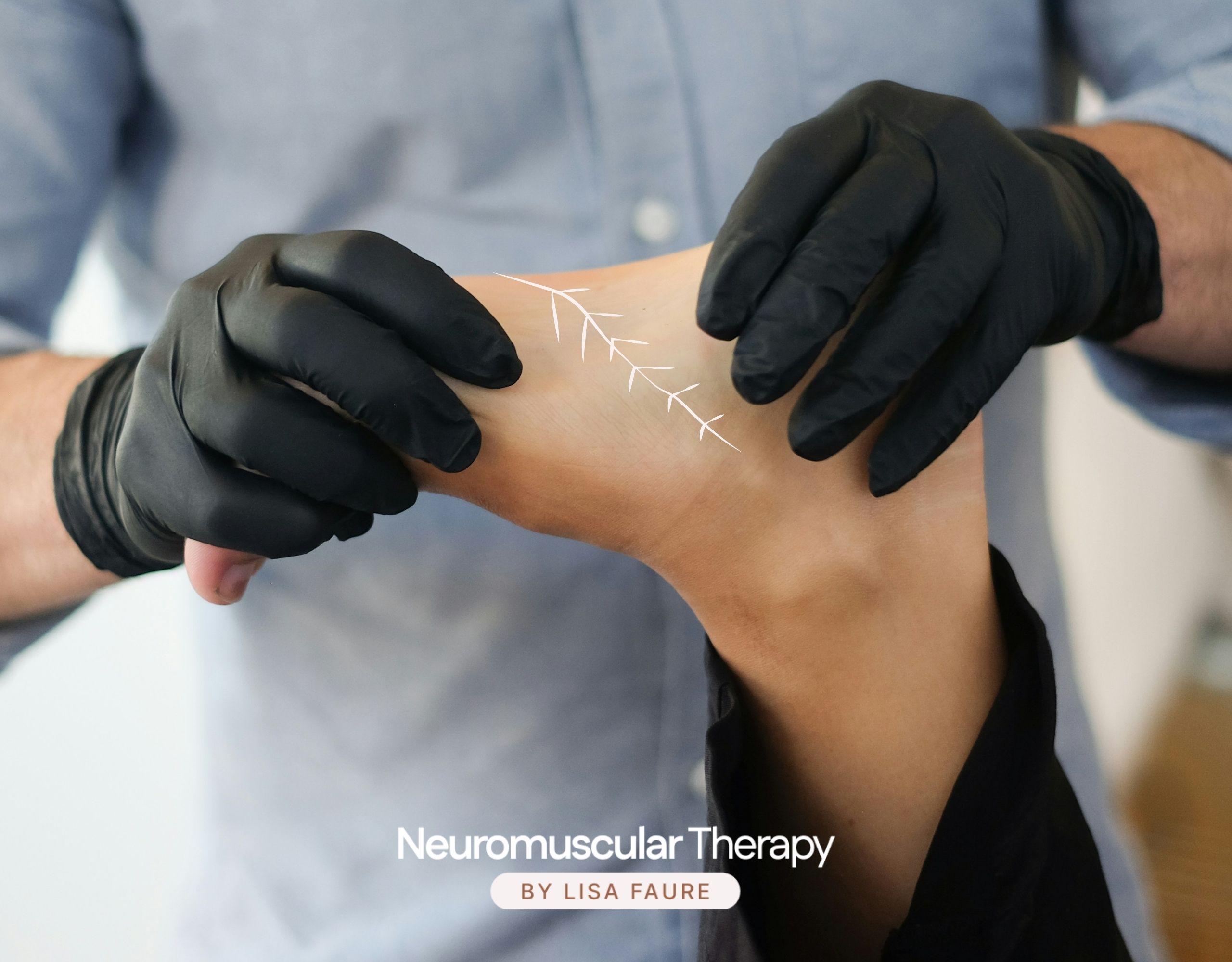
It broadly connects tissues along the back of the body, including structures associated with the bottom of the foot, calf, hamstrings, back, and neck.
For example, someone experiencing tightness in the calves may also notice tension elsewhere along the back of the body.
That doesn't mean calf tightness automatically causes back or neck pain. Pain and movement are much more complex than a single fascial pathway.
Instead, the concept encourages practitioners to consider whether several areas are participating in the same movement pattern or experiencing related tension.
The Front Functional Line
Another proposed pathway is the Front Functional Line, which describes relationships between structures across the front of the body.
These connections can be relevant when considering movements that involve the trunk, pelvis, shoulder, and opposite side of the body.
The body frequently uses diagonal patterns during activities such as walking, reaching, throwing, and rotating.
Understanding these connections can help explain why movement assessments often look beyond the exact location where someone feels discomfort.
The Back Functional Line
The Back Functional Line is another myofascial connection supported by anatomical research.
It describes relationships involving structures such as the latissimus dorsi and the opposite-side gluteal region.
These diagonal connections are particularly interesting when looking at activities involving rotation and coordinated movement between the upper and lower body.
Research has identified anatomical continuity in these types of myofascial chains, although more research is needed to determine precisely how these connections influence movement and symptoms in living people.
Fascia and Pain: Can Fascia Cause Pain?
Fascia can be involved in musculoskeletal pain, but it's important not to oversimplify the relationship.
Pain can involve muscles, joints, nerves, connective tissues, the nervous system, previous injuries, movement patterns, stress, and many other factors.
Fascial tissue also contains sensory structures involved in detecting mechanical and other stimuli. Researchers are investigating how these sensory properties may contribute to movement, proprioception, and pain.
This means that treating only the location where pain is felt isn't always the only approach worth considering.
A broader assessment may look at movement, surrounding tissues, mobility, strength, posture, and how different areas of the body work together.
Fascia Lines vs. Traditional Chinese Medicine Meridians
You may also hear the word meridian used when discussing fascia.
It's important to distinguish between two different concepts.
Myofascial meridians describe anatomical and functional relationships between muscles and connective tissues.
Traditional Chinese Medicine meridians are part of a traditional medical framework involving pathways and acupuncture points.
There has been research exploring possible anatomical relationships between fascial networks and acupuncture meridians. Some researchers have proposed that connective tissue could provide an anatomical basis for portions of the traditional meridian system. However, this remains a hypothesis and does not establish that the two systems are identical.
Keeping these concepts distinct allows us to appreciate the interesting research without overstating what science has established.
Why Does Understanding Fascia Matter?
One of the most useful ideas behind fascial research is that the body works as an interconnected system.
When you're walking, exercising, recovering from an injury, or simply maintaining posture, your muscles and connective tissues are constantly coordinating with one another.
Understanding these relationships can help practitioners consider questions such as:
Is the painful area the only area contributing to the problem?
Are surrounding muscles compensating for restricted movement?
Is there reduced mobility somewhere else in the movement chain?
How are the hips, spine, shoulders, and feet working together?
Could improving movement in one area change how another area functions?
These questions don't replace a thorough clinical assessment. Instead, they can provide another lens through which to understand movement and musculoskeletal health.
What Can You Do to Support Healthy Fascia?
There isn't one exercise or treatment that "fixes" fascia.
Fascial health is supported as part of overall movement and physical health.
Depending on your individual needs, a comprehensive approach may include:
Regular movement: Walking, strength training, mobility work, and other forms of physical activity expose tissues to varied movement and loading.
Strength and stability: Building strength can help your body handle everyday physical demands and exercise more effectively.
Mobility: Maintaining comfortable ranges of motion can support efficient movement.
Recovery: Sleep, nutrition, hydration, and appropriate recovery all contribute to overall tissue health.
Individualized treatment: When pain, stiffness, or movement limitations persist, an individualized assessment can help identify contributing factors rather than focusing only on the location of a symptom.
The Bottom Line
Fascia is an important part of the body's connective tissue system, and research increasingly supports the existence of anatomical connections between muscles and fascial tissues.
The concept of myofascial chains or fascia lines provides a useful framework for understanding how different parts of the body can participate in coordinated movement. Research supports some of these anatomical connections more strongly than others, while the full functional and clinical significance of these pathways continues to be studied.
Understanding the body as an interconnected system can be one piece of a broader, individualized approach to wellness and movement.
Your body doesn't operate in isolated parts. Movement, structure, recovery, and overall health are connected.
Frequently Asked Questions About Fascia Lines
What are fascia lines?
Fascia lines are proposed pathways of interconnected muscles and connective tissues that describe how different regions of the body may work together during movement. They are also commonly called myofascial chains or myofascial meridians.
What is a myofascial chain?
A myofascial chain is a series of anatomically connected muscles and fascial tissues that may participate in coordinated movement and mechanical force transmission.
Can fascia cause pain?
Fascial tissues contain sensory structures and can be involved in musculoskeletal pain, but pain is complex and can have multiple contributing factors. Fascia should not automatically be considered the sole cause of pain.
Are fascia lines scientifically proven?
Research supports anatomical continuity for several proposed myofascial chains, particularly the Superficial Back Line and certain functional lines. However, evidence for the functional significance of every proposed fascia line is not equally strong, and additional research is needed.
What is the difference between fascia lines and meridians?
Myofascial meridians are anatomical models describing relationships between muscles and connective tissues. Traditional Chinese Medicine meridians are part of a separate traditional medical system. Research has explored possible relationships between fascial networks and traditional meridians, but they should not be treated as synonymous.

Chiropractic Care Didn't Fix My Back Pain. What Should I Try Next?

Neuromuscular Therapy vs. Deep Tissue Massage: What's the Difference?

Neuromuscular Therapy for Whiplash and Car Accident Injuries

Carpal Tunnel Treatment Without Surgery
Plantar Fasciitis Treatment

TMJ Jaw Pain Specialist in Scottsdale: How Neuromuscular Therapy May Help

How Neuromuscular Therapy Can Help With Sciatica Relief

Frozen Shoulder Therapy

Aftercare: How to Support Your Body After a Treatment
Understanding Fascia Lines and Myofascial Meridians: How Your Body Is Connected